Countertops are an important investment. Not only financially, but also in terms of the amount of space they occupy in your renovated or new construction space. To most clients, maintaining this upgrade in order to keep it at its peak beauty and performance is a top priority!
This can be best achieved by sealing natural stone countertops annually. Natural stone is porous, which means food, liquids, cleaning supplies, and even condensation can all be absorbed and cause damage plus staining. Sealing these countertops prevents ugly destruction. Even water stains and gentle cleaners can make an unsealed countertop look cloudy and dingy.
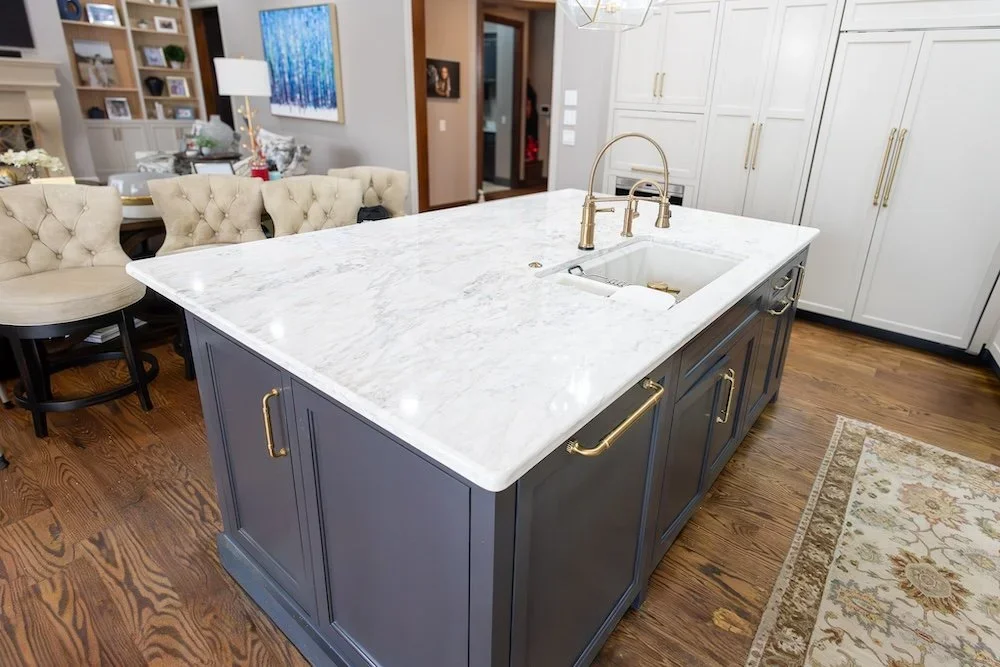
Did you know it is highly encouraged in the industry to regularly seal pure white or matte/honed quartz. To seal countertops quartz provides a layer of protection for colors and textures which are more susceptible to scars, stains and other use indicators. Further, marble and other very delicate stones should be sealed every six months to maintain their best appearance.
What Does Stone Sealer Do?
A common idea about sealers is that they create a protective layer which sits on top of a material. While this is true for something like a veneer layer on wood furniture or hardwood floors, natural stone sealant works differently. Instead of resting atop the surface, stone sealer goes below the surface, impregnating the stone to protect the pores from the bottom up.
Benefits of Sealed Counters
While sealing is obviously essential to preventing staining, there are other benefits to maintaining the seal on your countertops.
Clean Faster — Sealed countertops can be quickly and easily wiped of fingerprints, crumbs, and other messes. Additionally, spilled liquids and condensation bead on top of the sealant, meaning no scrubbing is needed.
Fewer Chemicals — When cleaning is easier, less harsh cleaning agents are necessary, which is better for the indoor air quality and the environment.
Reduce Etching — Etching occurs when acidic solids and liquids, like lemon and vinegar, come in contact with the counter. By maintaining countertop sealing, this damage can be minimalized.
What Countertops Need to be Sealed?
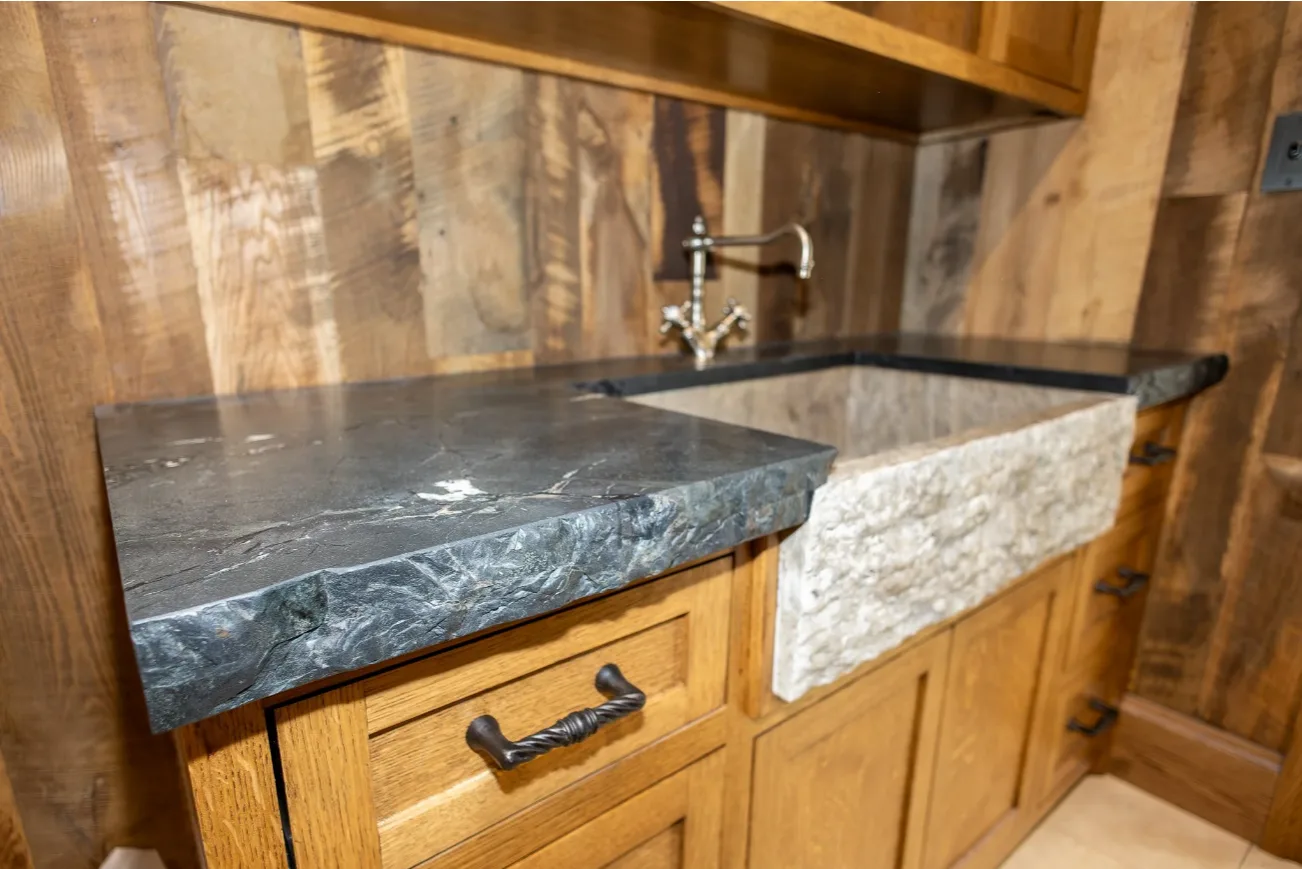
- Natural Stone — Because natural stone, such as granite and marble, is porous, anywhere it is not sealed can be damaged or stained by water, food grease, and cleaning products which seep into the stone.
- Countertops Over a Year Old — New countertops typically have a sealant applied before or during installation, so the sealing will not need to be redone for six months or a year afterwards.
Sealant Timeline: Things to Consider
Sealing frequency ultimately depends on the condition and use of the countertops, although once per year is the general timeline. Beware of manufacturers who use fear as a tactic to sell products and services more often. Over-sealing countertops can cause unsightly film or haze on the finish.
Checking Your Seal
Checking the status of the existing countertop sealant is the best way to know when to reapply. First, locate an inconspicuous area of the counter. Next, pour a quarter cup of water directly onto the countertop. If the water beads up on the surface, your sealant is intact. If the water starts to seep into the stone or a dark spot starts to appear within 10 minutes, plan to reseal soon.
Another popular way to test sealant is to apply mineral oil to a small area and leave it for about 10 minutes. When wiping up the mineral oil, check for darkening in the stone.
Professional Services
Sealing countertops can be a DIY venture or something you'd rather a professional handle. TNT provides countertop sealing service for new, older and non-TNT installed stone. Get your free quote today for a full deep clean, removal of impurities, and professional sealing.